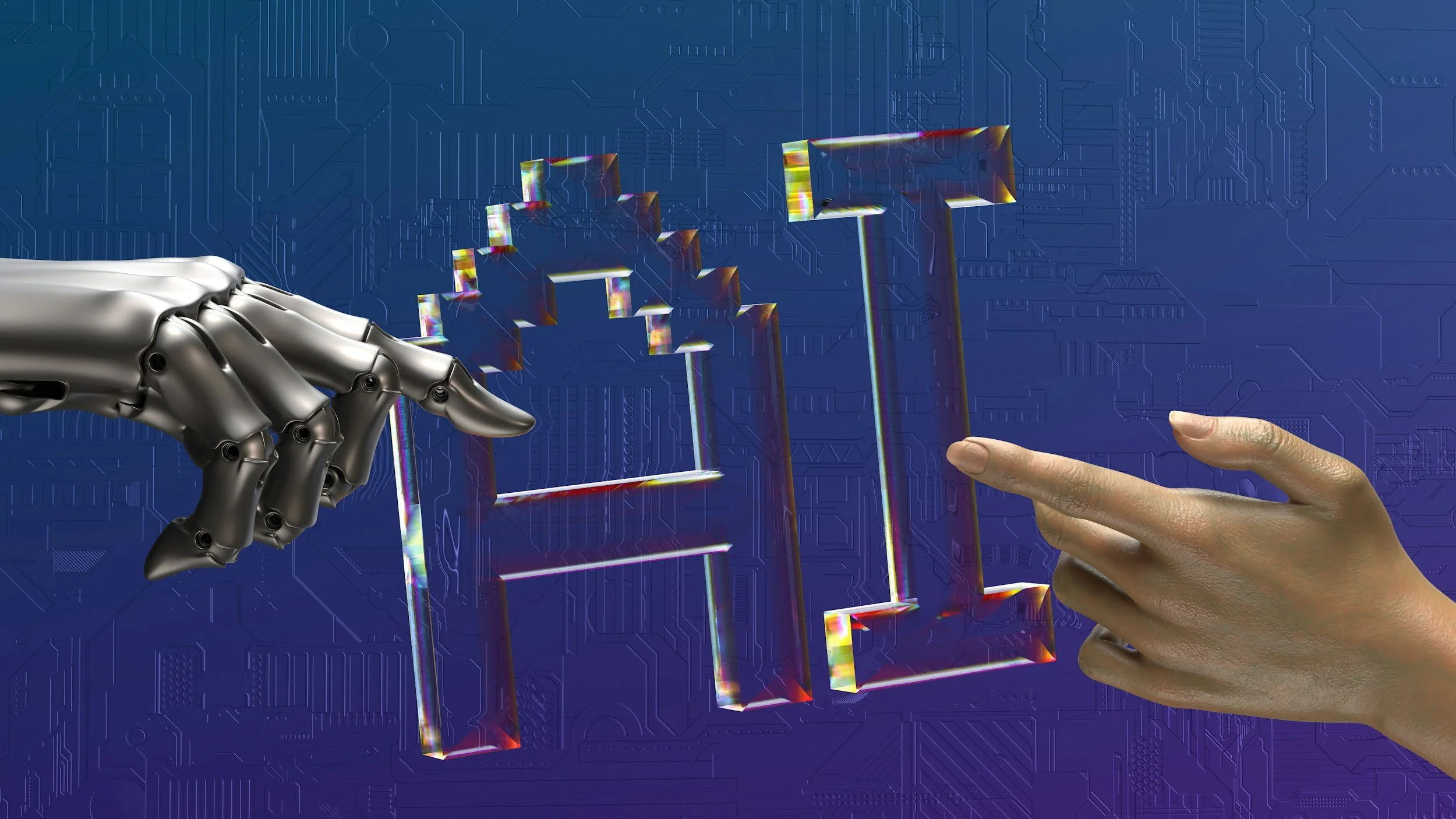
AI is everywhere. The emerging guidelines across many professional fields advise that AI is a powerful tool that is best used with human oversight.
But when AI is being used to fill a need for human connection or emotional support – be it a professional or personal relationship – how is oversight possible?
As a Psychologist, one of my greatest weaknesses has always been my ability to recall specific pieces of information precisely. An AI therapist definitely doesn’t have this issue. An AI therapist would be exceptionally good at quickly bringing “evidence-based” therapeutic interventions into a session exactly how they are described in the manuals. You might even be able to train your AI therapist to offer one type of therapy intervention like the reputable and established “CBT” or its younger but highly popular relative “DBT.”
What makes for great therapy though is not only the knowledge of evidence-based interventions. If only it were this straightforward. The number of times excellent recommendations are agreed upon but not implemented outside of therapy is staggeringly high.
I was fortunate to have supervisors early on in my training explain to me that you must package your life-changing recommendation or insight in the right way so it makes an impact and you must pick your timing with your clients. And the right way isn’t the same for every client.
People are complicated – we have defenses, we have different parts to ourselves (sometimes in direct conflict), we are emotional, we are irrational, we have unconscious drives and motives, we have early life experiences that have shaped us, and, most importantly, we have a really hard time communicating all of this information explicitly or even accessing it. Which is why it is helpful to have a real human professional who can help us see and understand the unspoken forces that are at play for us.
From what I have read and heard, AI therapists can’t be beat when it comes to offering emotional validation. There is no question that this can be therapeutically helpful; however, does it mean as much when it comes from an artificial source? It can’t really feel as authentic. It may also in fact perpetuate whatever is resulting in problems for us in the first place.
In my experience, the powerful and life-transforming moments in therapy happen because it is a sharedexperience with another human. Our vulnerabilities, shame, struggles, and hopefully our growth are all shared with and witnessed by another person. I can’t imagine this would have the same transformative effect if it were witnessed by a bot.
I find it interesting to think about what clients find appealing about AI therapists. You can’t argue with the immediate and unlimited access and price point. I can also appreciate that some find it easier to chat with an AI therapist than a real life professional. Lower stakes and almost no risks – after all, it isn’t a real relationship.
Despite what an AI therapist can offer, I still believe that what makes for great therapy is not within the capabilities of AI. So go ahead… tell your Psychologist about your AI therapist. Hopefully, they will welcome this third party into your professional relationship and coach you on how to work with your AI therapist to optimize its benefits while continuing to offer you a very real human relationship which should involve challenge, unexpected insights, courageous communication, moments of discomfort and, as a result, healing and self-actualization.